
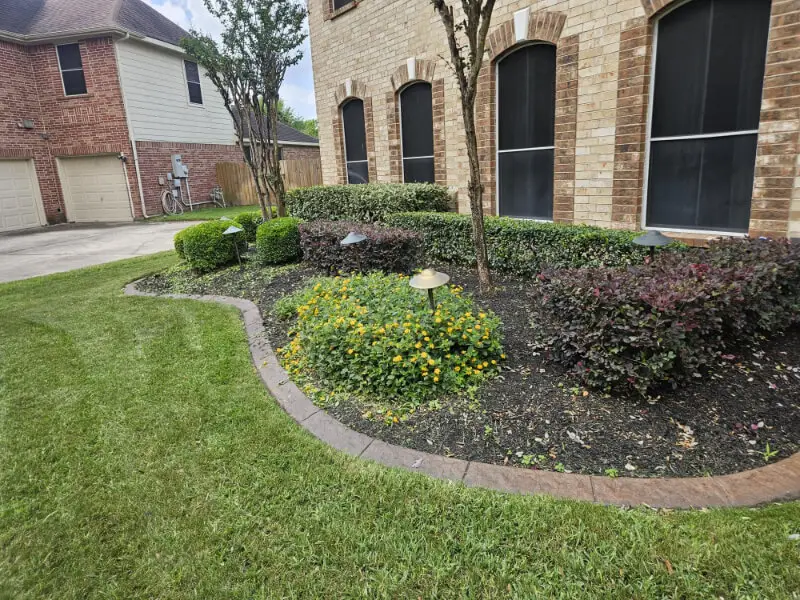
how much mulch do I need: How much mulch do I need is one of the first questions to answer before refreshing landscape beds or requesting a mulch installation estimate.
Table of Contents
- Quick Answer
- Choose the Right Mulch Depth
- How to Measure a Bed
- Example Mulch Estimate
- Should Old Mulch Be Removed?
- Houston and Fort Bend Considerations
- What to Send for a Mulch Estimate
- FAQ
Quick Answer
How much mulch do I need is one of the first questions to answer before refreshing landscape beds or requesting a mulch installation estimate.
To estimate mulch, measure the square footage of the bed and multiply by the desired depth. For cubic yards, use this formula:
square feet x depth in inches x 0.0031 = cubic yards
For example, a 200 square foot bed at 2 inches deep needs about 1.24 cubic yards of mulch. The final amount can change if the bed shape is irregular, old mulch is already present, or the bed needs cleanup before installation.
Choose the Right Mulch Depth
Mulch depth depends on whether you are refreshing an existing bed or building coverage from a thin or bare surface.
A light refresh may need less material than a new bed. For weed control and moisture protection, Texas A&M WaterSmart guidance notes that coarse mulch is often used at 3 or more inches. Fort Bend AgriLife guidance also warns not to exceed about 4 inches and not to pile mulch against tree trunks.
That means the right depth is not always “more is better.” Too much mulch can create problems around plants and trees.
How to Measure a Bed
For a square or rectangle:
length x width = square feet
For a curved or irregular bed, break it into smaller rectangles or estimate the average length and average width. It does not have to be perfect for a planning estimate, but closer measurements produce a better material estimate.
If you are requesting a professional estimate, photos help show bed shape, edging, weeds, old mulch, and access.
Example Mulch Estimate
Suppose a front bed is about 40 feet long and 5 feet deep.
40 x 5 = 200 square feet
At 2 inches deep:
200 x 2 x 0.0031 = 1.24 cubic yards
At 3 inches deep:
200 x 3 x 0.0031 = 1.86 cubic yards
That difference matters. A thicker layer may be useful in some beds, but it also increases material, labor, and cleanup needs.
Should Old Mulch Be Removed?
Not always. If the old mulch is thin and clean, a refresh may be enough. If the bed has built up too much material, has weeds, has compacted layers, or is piled against trees and shrubs, cleanup may be needed before adding more.
Mulch should not be shaped like a mound against a tree trunk. Keep mulch away from direct trunk contact and spread it more evenly through the bed.
Houston and Fort Bend Considerations
Mulch breaks down over time, especially in warm, humid areas. In Houston-area landscapes, mulch can help protect soil moisture and improve the look of beds, but it still needs maintenance.
Beds with heavy shade, poor drainage, thick weeds, or uneven borders may require more preparation before new mulch is installed.
What to Send for a Mulch Estimate
Helpful estimate details include:
- Photos of each bed.
- Approximate length and width.
- Desired mulch color or type, if known.
- Whether old mulch is present.
- Whether weeds or leaves need cleanup.
- Whether the bed includes trees, shrubs, or delicate plants.
LoneGreen can use that information to prepare a more realistic mulch installation estimate for Sugar Land, Richmond, and nearby areas.
FAQ
How much does one cubic yard of mulch cover?
Coverage depends on depth. One cubic yard covers about 162 square feet at 2 inches deep or about 108 square feet at 3 inches deep.
Is 4 inches of mulch too much?
Four inches may be near the upper limit for many beds. More is not automatically better, especially around trees and plant crowns.
Can mulch help with weeds?
Mulch can help reduce weed pressure, but it does not make a bed maintenance-free.
how much mulch do I need: Local Decision Factors
For LoneGreen customers, how much mulch do I need is not a one-size-fits-all question. Yard size, access, grass growth, existing landscape condition, and the season all affect the best next step.
how much mulch do I need FAQ
Can LoneGreen give an estimate from photos?
Photos can help start the estimate conversation, especially when they show the front yard, backyard, side access, and any cleanup or landscape-bed details. Some conditions may still require follow-up before final pricing.
What is the best next step?
For a mulch estimate, send LoneGreen photos of the beds, rough measurements, and whether old mulch or weeds need cleanup first.