
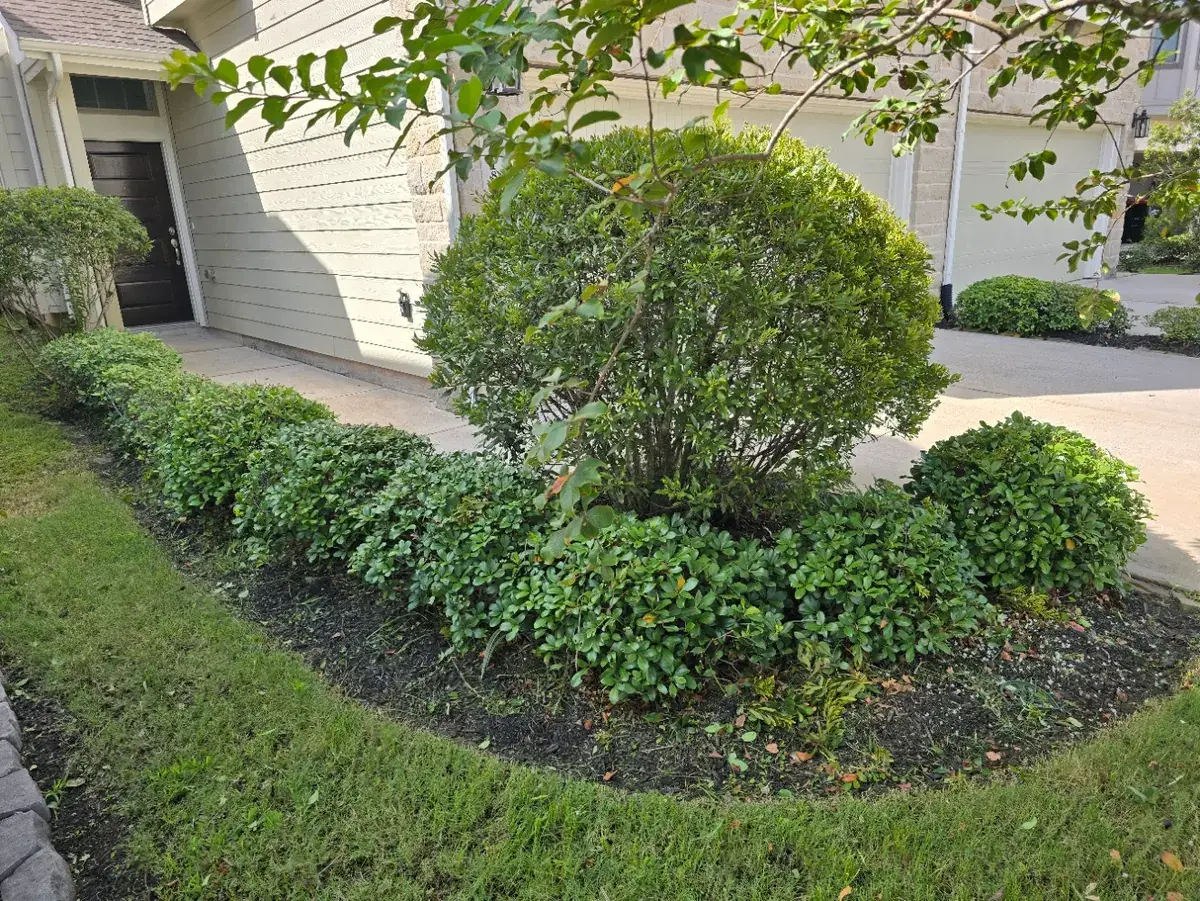
St Augustine mowing Houston: St Augustine mowing Houston lawns well means cutting often enough during active growth without cutting the grass too short or removing too much blade at once.
Table of Contents
- Quick Answer
- Why St. Augustine Is Common in Houston
- The One-Third Rule
- Weekly vs. Biweekly for St. Augustine
- Houston Weather Changes the Answer
- Signs Your St. Augustine Schedule Is Too Far Apart
- What to Send for an Estimate
- FAQ
Quick Answer
St Augustine mowing Houston lawns well means cutting often enough during active growth without cutting the grass too short or removing too much blade at once.
During active growing season, many Houston-area St. Augustine lawns need weekly mowing or mowing often enough to keep the lawn from being scalped. Texas A&M AggieTurf guidance places St. Augustine mowing in the 2 to 4 inch range and warns against removing more than one-third of the leaf tissue at one time.
That does not mean every St. Augustine lawn needs the same schedule. Rain, irrigation, shade, heat stress, and soil conditions can all change how quickly the grass grows.
Why St. Augustine Is Common in Houston
St. Augustine is widely used in warm, humid parts of Texas because it can form a thick lawn and performs better in some shaded areas than Bermuda. In Sugar Land, Richmond, and southwest Houston, it is common to see St. Augustine around homes with trees, fences, and partly shaded yards.
The tradeoff is that it can look rough when it is cut too short or when too much height is removed in one mowing. A schedule that works in a slow-growth month may not be enough after warm rain.
The One-Third Rule
A useful mowing rule is to avoid cutting off more than one-third of the grass blade at once. If the lawn is allowed to get too tall, the next cut has to remove more leaf tissue, which can leave the yard looking stressed.
This is why a lawn may need more frequent service in spring, early summer, or rainy stretches. The goal is not just a short lawn. The goal is a clean cut that does not shock the turf.
Weekly vs. Biweekly for St. Augustine
Weekly lawn care is usually better when St. Augustine is:
- Growing quickly.
- Getting irrigation.
- In full or partial sun.
- Thick enough to clump when cut.
- Noticeably tall before the next scheduled visit.
Biweekly can work when:
- Growth is slower.
- The lawn is partly shaded.
- The customer accepts a less manicured look between visits.
- The grass does not get too tall before the next cut.
If a biweekly schedule repeatedly leads to heavy mowing, clumps, or brown-looking cuts, the schedule may be too far apart for that season.
Houston Weather Changes the Answer
Houston-area lawns often respond quickly to warm rain. After a wet week, St. Augustine can look tall sooner than expected. At the same time, mowing immediately after heavy rain may not be ideal if the grass is soaked or the soil is soft.
Heat can also change growth. A lawn under drought stress may slow down, while an irrigated lawn may continue growing. That is why the best schedule is based on the yard, not only the calendar.
Signs Your St. Augustine Schedule Is Too Far Apart
Your mowing frequency may need adjustment if:
- The mower leaves heavy clumps.
- The lawn looks brown or scalped after cutting.
- Edges grow over sidewalks before the next visit.
- The grass lays over instead of standing upright.
- The yard looks overgrown for several days before service.
These signs do not always mean the lawn is unhealthy. They often mean the service interval is not matching current growth.
What to Send for an Estimate
When requesting lawn care in Sugar Land, Richmond, or nearby Fort Bend areas, send a few clear photos of the front, back, and side yard. If you know the grass type is St. Augustine, mention it. Also note whether the yard is irrigated, shaded, or currently overgrown.
That information helps LoneGreen recommend whether weekly or biweekly lawn care is a better starting point.
FAQ
Should St. Augustine grass be cut short?
Usually, no. Cutting too short can stress the turf and make the lawn look scalped.
Is biweekly mowing bad for St. Augustine?
Not always. It depends on how fast the lawn grows between visits.
Does shade change mowing frequency?
Yes. Shaded St. Augustine often grows differently than sunny areas, so schedule and height may need to account for those conditions.
St Augustine mowing Houston: Local Decision Factors
For LoneGreen customers, St Augustine mowing Houston is not a one-size-fits-all question. Yard size, access, grass growth, existing landscape condition, and the season all affect the best next step.
St Augustine mowing Houston FAQ
Can LoneGreen give an estimate from photos?
Photos can help start the estimate conversation, especially when they show the front yard, backyard, side access, and any cleanup or landscape-bed details. Some conditions may still require follow-up before final pricing.
What is the best next step?
If your St. Augustine lawn grows too fast between visits, ask LoneGreen whether weekly or biweekly lawn care fits your yard.